
Introduction
Choosing a contract manufacturing partner is a strategic decision that affects product quality, lead times, scalability, risk exposure, and how fast you reach market. The wrong choice can mean scrapped parts, missed launch windows, and a painful re-sourcing project a year later.
This guide is written for OEMs, medical-device startups, procurement teams, and product developers comparing contract manufacturers for prototypes, first articles, or recurring production runs. Many buyers struggle with the same questions: How do you tell a real manufacturing partner from a job shop that just runs machines? What belongs in an RFQ? What quality evidence actually matters?
We'll define contract manufacturing, explain what these companies actually do day to day, break down partner-selection criteria, and show what to verify before you award production work.
Key Takeaways
- Contract manufacturers build components or finished goods to your specs, quality standards, timelines, and commercial terms.
- Strong partners improve manufacturability, quality planning, and communication, not just machine time.
- Score experience, certifications, equipment, inspection, capacity, and total value over unit price alone.
- Medical device OEMs need quality systems, full traceability, and engineered-component experience.
What Is a Contract Manufacturing Company?
A contract manufacturing company produces components or finished goods on behalf of an original equipment manufacturer (OEM), according to agreed specifications, quality standards, and commercial terms. The OEM typically retains ownership of the product design, brand, and customer relationship. The contract manufacturer owns the production process.
OEM vs. Contract Manufacturer vs. Vendor
These terms get used interchangeably, and that's a mistake. Here's the actual distinction:
| Term | Role |
|---|---|
| OEM | Develops, owns, brands, and sells the product |
| Contract manufacturer | Produces the product or its components to spec |
| Vendor/supplier | Provides a narrower material, component, or service, without the broader production relationship |
ISO terminology treats a vendor as one example of a "provider," which can include producers, distributors, or contractors operating under a contractual arrangement. A contract manufacturer typically takes on more responsibility than a single-item vendor, often including process planning, inspection, and documentation.
Common Models and Why Companies Outsource
Contract manufacturing isn't one thing. It spans several models:
- Component machining (single parts to spec)
- Subassembly production
- Finished-product manufacturing
- Prototype and first-article work
- Low-volume production
- High-volume, repeat production
Companies outsource for reasons that go beyond "we don't have a machine shop." Specialized medical contract manufacturers often provide material selection and prototyping support that would take years to build in-house, according to Medical Design Briefs.
Outsourcing gives access to specialized equipment, skilled personnel, and quality systems without the capital investment of building every capability internally.
The trade-off is real, though. Outsourcing can mean less direct control, communication gaps, and dependence on an outside partner for quality consistency. Intellectual-property exposure is a legitimate concern too, which is why confidentiality terms belong in every agreement.
What Does a Contract Manufacturer Do?
A contract manufacturer's work starts long before a part gets machined. The typical lifecycle looks like this:
- Drawing and specification review – inspection planners check prints, identify critical features, and determine how they'll be measured.
- Process planning – teams build out tooling, CAM programming, and measurement instructions.
- Material sourcing – buyers tie purchase orders, certifications, and receiving records to the job.
- Machining or assembly – operators present tools and produce parts.
- Inspection – technicians collect data at the workstation, not just at the end of the line.
- Documentation and shipment – records travel with the part.
Digital job-shop workflows documented by Modern Machine Shop show inspection data captured directly at the workstation, with purchased-item records linking procurement, receiving, and certifications in one system.
What Needs to Be Defined Upfront
Responsibilities vary by agreement, and vague contracts cause problems later. Before production starts, define ownership of:
- Tooling and fixtures
- Material sourcing and substitutions
- Inspection criteria and acceptance limits
- Nonconforming-part handling
- Revision control
- Packaging and inventory
- Final release authority
A strong contract manufacturer also helps you move from prototype quantities to repeat production. That includes coordinating subcontractors and keeping the records that make scale-up smooth instead of chaotic.

How to Choose a Contract Manufacturing Partner
Start before you compare a single vendor. Define your own requirements first: materials, tolerances, dimensions, expected quantities, prototype vs. production status, quality standards, delivery timing, and regulatory needs. You can't evaluate a partner against criteria you haven't set.
Assess Industry and Process Fit
Ask whether the company has produced comparable components. A shop that's great at automotive brackets isn't automatically qualified for orthopedic implant instrumentation. Request examples of similar work (without expecting confidential customer details).
Verify Manufacturing Capabilities
Review the actual equipment, not just the sales pitch:
- Machining platforms (milling, turning, Swiss-type)
- Multi-axis and automation capability
- Inspection equipment (CMM, vision systems, optical comparators)
- Production range covering both prototype runs and future volume
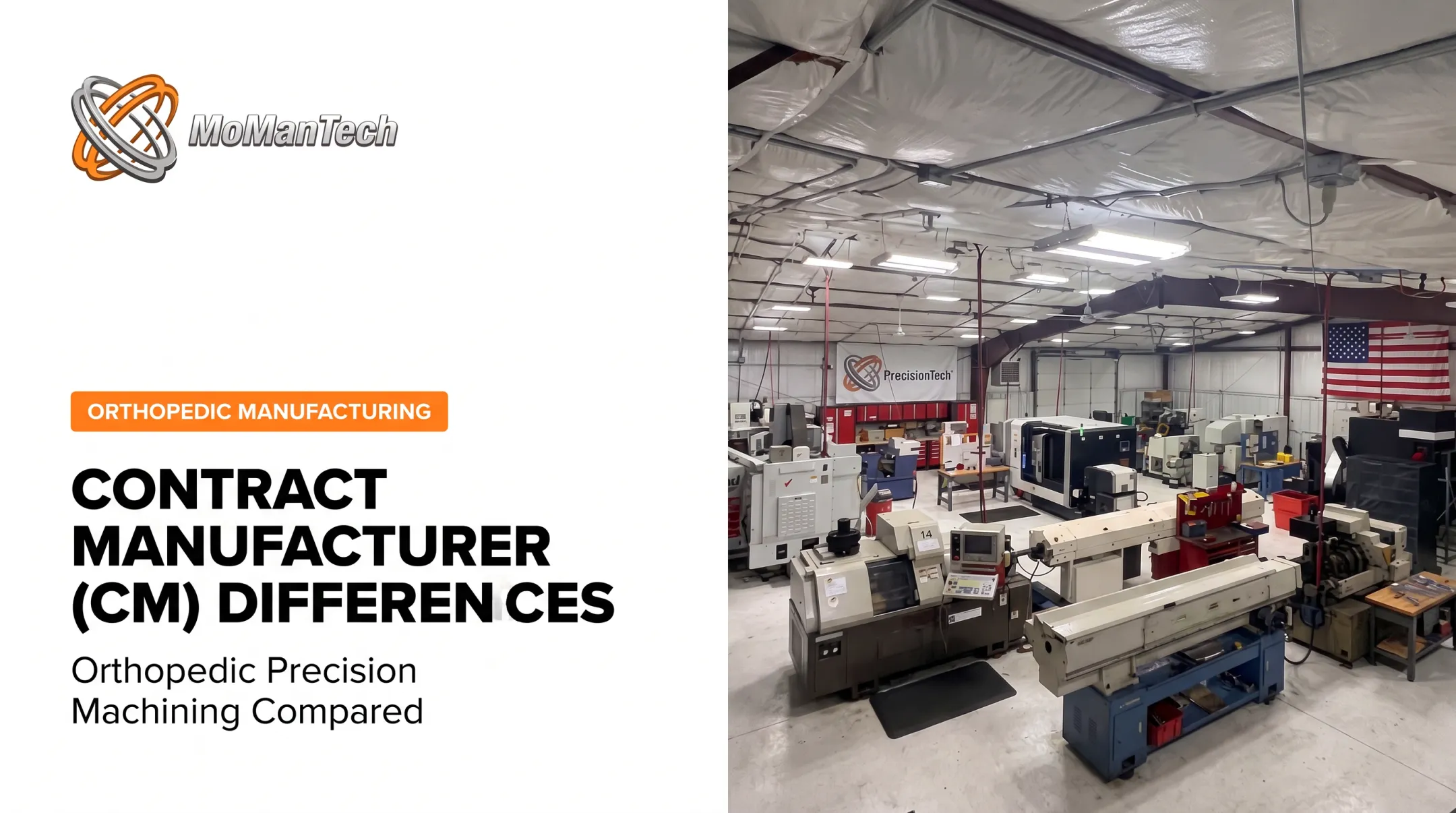
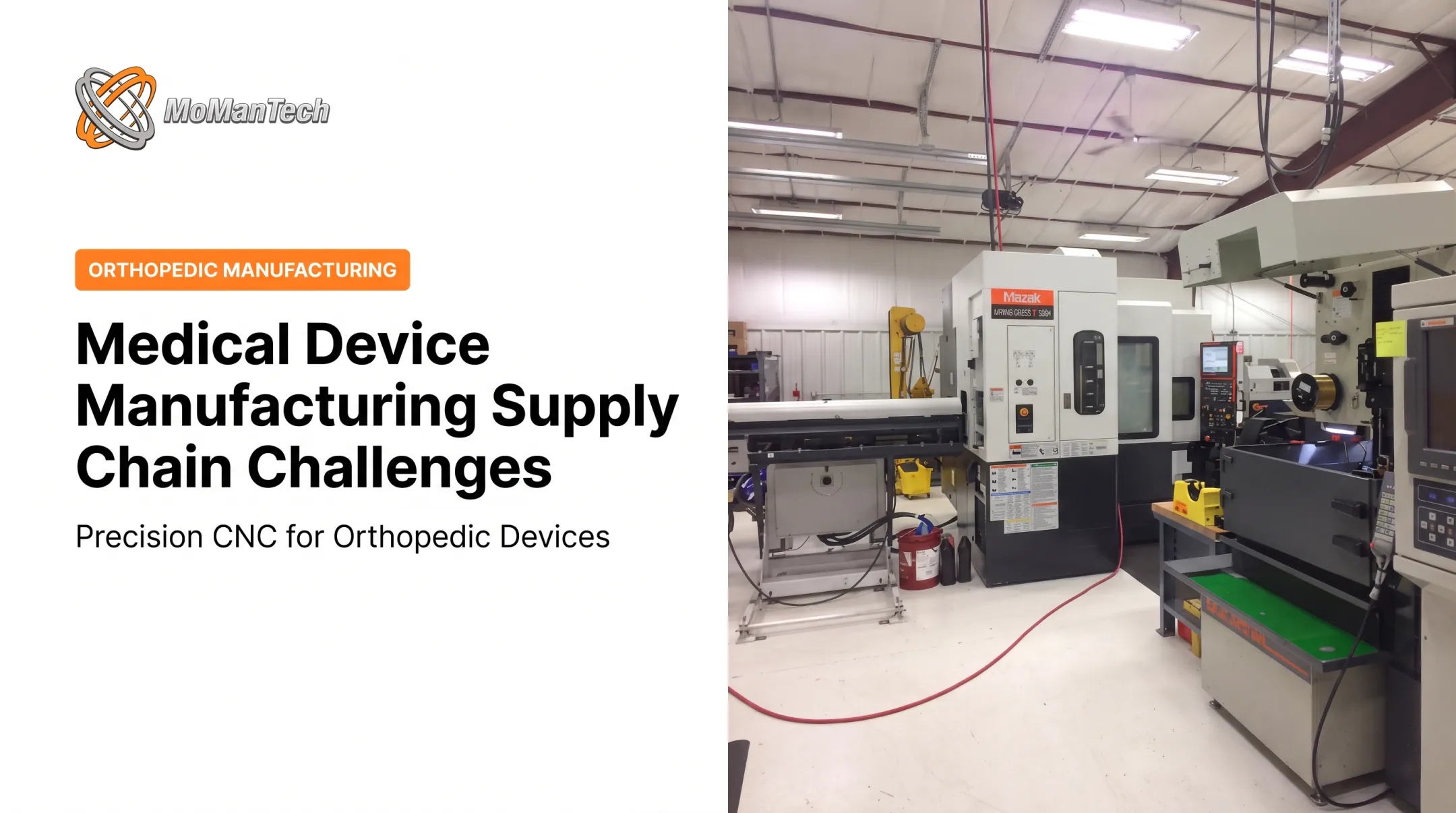
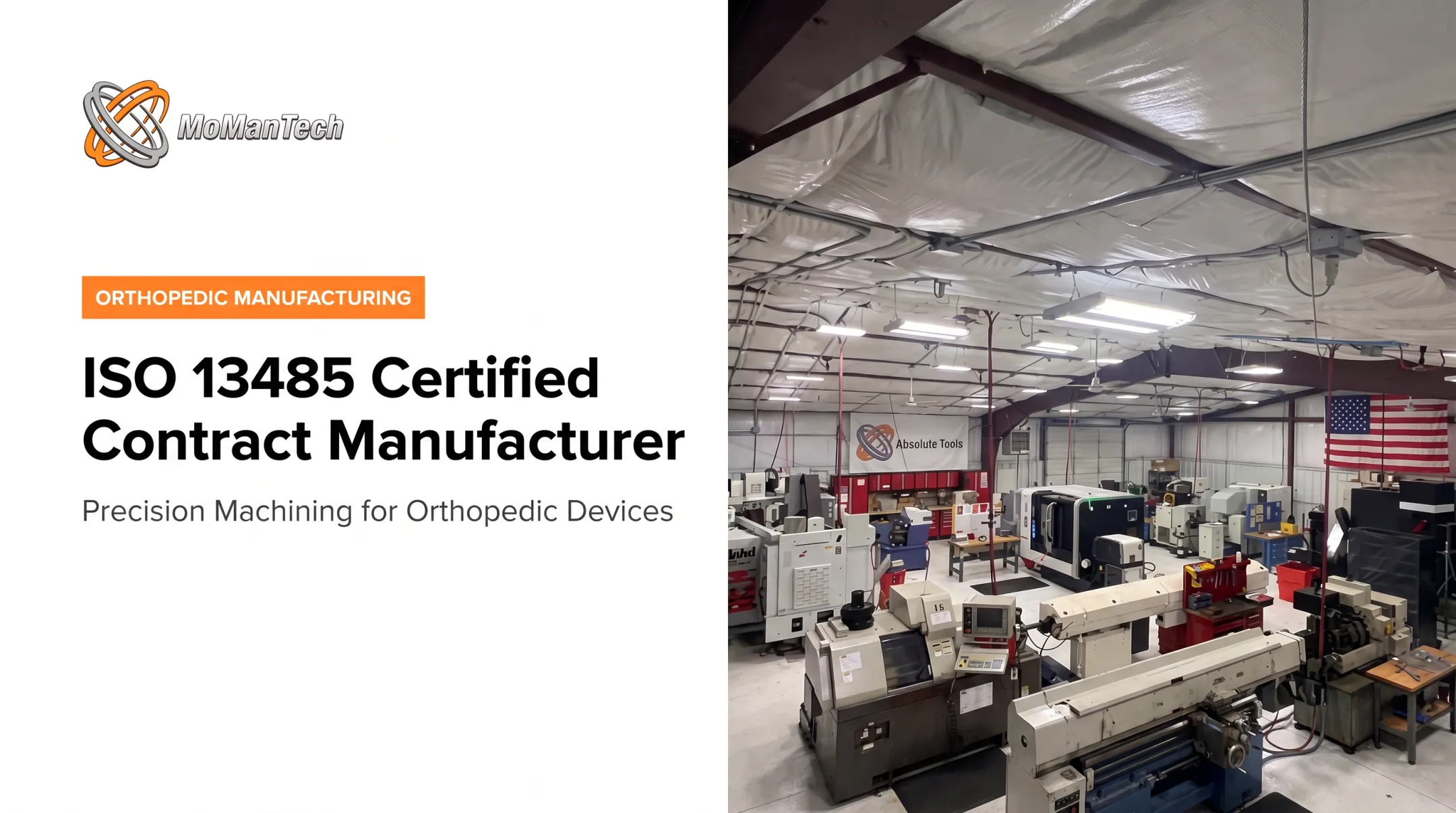
One example: MoManTech runs two 6-axis Mazak Integrex I-150 machines, a 9-axis Quicktech S42ATM with full C-axis capability, and Swiss lathes including a NexTurn SA20PYII and Citizen M20. That equipment supports both low-volume prototype lots of 1–10 units and production runs of 100+.
Examine Quality Systems
Request current certifications, calibration practices, nonconformance processes, and corrective-action procedures. A formal quality-system check, supplier visit, and sample evaluation are standard parts of qualification, according to ASQ's supplier guidance.
Compare Total Value, Not Unit Price
A lower quoted price can cost more overall once you add tooling, programming, inspection, packaging, freight, and minimum-quantity requirements. The NIST supplier framework gives a useful example: a higher-priced raw input, like extrusions already cut to size, can lower total cost by eliminating downstream processing entirely. Price per piece isn't the full picture.

Confirm Scalability and Continuity
Ask how the partner handles:
- Sudden demand increases
- Equipment downtime
- Material shortages
- Urgent orders and engineering changes
Don't accept vague reassurances. Ask for specifics on contingency planning, and don't assume capacity exists just because it's claimed.
How to Evaluate and Qualify Potential Companies
Build your shortlist using objective criteria, then move to a structured evaluation:
- Industry fit and process capability
- Certification status and quality systems
- Location, production quantities, and capacity
- Communication quality and customer references
Send a Real RFQ, Not a One-Line Email
A usable request for quotation includes:
- Controlled drawings and 3D models
- Material specifications and revision levels
- Inspection requirements
- Forecast quantities and delivery expectations
- Packaging instructions
- Specific written questions
Incomplete drawings cause incomplete quotes. A thorough part-drawing checklist should cover material grade, hardness, acceptable substitutions, tolerances, and finishing requirements, per guidance from the Precision Machined Products Association.
Do the Due Diligence
Before approving a new partner, review:
- Facility condition and equipment maintenance records
- Employee training and document control
- How they handle nonconformances and CAPA
A site visit tells you more than a technical audit sheet ever will.
Test the Relationship First
Use a prototype, sample, or first-article phase before committing to recurring production. Define acceptance criteria upfront, review dimensional results, and document how the partner handles corrective actions. This single step catches most mismatches before they become expensive.
Put the relationship in writing before production ramps:
- Confidentiality and IP ownership
- Revision control, tooling ownership, and change notification
- Delivery, payment terms, and dispute procedures
A handshake is not a quality agreement.
Why Specialized Medical-Device Manufacturing Experience Matters
Orthopedic implants and instruments demand more than general machining competence. Tight tolerances, repeatability across lots, documented inspection, and disciplined change control are core requirements, not optional extras. A shop that occasionally runs medical work alongside everything else isn't the same as one built around it.
A Specialized Example
MoManTech is ISO 13485:2016-certified and focuses exclusively on spinal, large-joint, trauma, and foot/ankle components. That focus shows up in the details:
- Design-for-manufacturability consultation during the planning stage
- Precision CNC machining, Swiss turning, and wire EDM (Chmer GX360L and Fanuc OA equipment)
- Additive-manufacturing prototyping in titanium, 17-4 and 316L stainless, and composite materials
- Comprehensive inspection using OGP Flash 302 Vision and Mitutoyo CMM equipment
- Production scaling from 1–10 prototype units to 100+ production runs
Automation plays a role, too. A cobot (nicknamed BOB internally) handles repetitive loading and unloading on high-volume mill jobs, supporting lights-out manufacturing and freeing skilled machinists for higher-value work. Automation supports consistency without replacing quality oversight. Every component still goes through inspection before it leaves the facility. Any automated process still needs validation against the customer's specific requirements.

Who Benefits From This Kind of Partner
- Pre-revenue startups needing prototypes and first articles before volume exists
- Small and mid-size OEMs (under $100M) wanting a responsive partner, not a ticket number
- Trauma and large-bone OEMs needing plates, screws, and nails machined domestically
- Spine, foot-and-ankle, and extremity companies producing complex, highly engineered components
Finished-device manufacturers also carry ongoing supplier-assessment obligations under FDA's quality management regulation, which took effect in February 2026 and incorporates ISO 13485:2016 by reference. That makes a certified, process-disciplined component supplier a practical necessity.
If you're evaluating partners for spine, trauma, large-joint, or foot-and-ankle components, MoManTech can review drawings, prototype needs, and production quantities directly. Reach the team at 406-842-5403 or kirt.johnston@momantech.com.
Frequently Asked Questions
What is the difference between OEM and contract manufacturing (CM)?
An OEM owns, develops, brands, and sells a product. A contract manufacturer produces the product or its components under an agreement with the OEM, without owning the brand or market relationship.
What does a contract manufacturer do?
A contract manufacturer handles production planning, machining or assembly, inspection, documentation, and delivery according to the OEM's specifications and contract terms. Scope varies by agreement.
How do I choose the right contract manufacturing company?
Compare relevant experience, process capability, quality certifications, communication, scalability, and total cost, not unit price alone. Use a prototype or first-article phase and check references before committing to volume.
What should I include in a contract manufacturing RFQ?
Include controlled drawings, 3D models, material specs, revision levels, quantities, tolerances, inspection requirements, schedule expectations, packaging instructions, and commercial terms.
Is contract manufacturing suitable for startups and low-volume products?
Yes. Many contract manufacturers support prototypes, first articles, and lower-volume runs. Startups should still confirm minimum quantities, engineering support, lead times, and the partner's ability to scale with them.
Why is ISO 13485 important when selecting a medical-device manufacturing partner?
ISO 13485 demonstrates a quality-management framework built for medical-device production. OEMs still need to independently verify process capability, documentation, inspection practices, and product-specific requirements.