
CNC multi-axis machining addresses this by adding rotary movement to the standard X, Y, and Z linear axes. Instead of repositioning the part by hand, the machine rotates the workpiece or tool to reach new faces and angles within the same setup. The result can be better access to difficult geometry, more consistent dimensions, improved surface finish, and shorter production cycles.
This guide is written for engineers and OEM teams evaluating whether multi-axis machining fits their next part, and how to choose a manufacturing partner capable of delivering it from prototype through full production.
Key Takeaways
- Multi-axis CNC machining coordinates linear and rotary motion to reach more features in fewer setups.
- 3-axis, 4-axis, 5-axis, and multitasking processes fit different geometries and budgets; adding more axes isn't automatically better.
- Typical gains include better manufacturability, higher repeatability, shorter lead times, and less handling.
- Orthopedic OEMs should weigh machining capability alongside inspection, documentation, and quality systems.
What Is CNC Multi-Axis Machining?
CNC machining uses computer-controlled equipment to remove material and shape a part. "Axes" describe the independent directions a cutting tool, spindle, table, or workpiece can move. Every CNC mill or lathe has at least three: X, Y, and Z for linear travel. Add rotary motion, and you get axes labeled A, B, or C, depending on which linear axis they rotate around.
Linear Axes vs. Rotary Axes
Not every machine configures these the same way. A horizontal machining center and a vertical one may orient their rotary axes differently, even if both are labeled "5-axis." What matters for a given part is which faces and angles the machine can actually reach, not just the axis count printed in a spec sheet.
Multi-axis machining generally refers to equipment capable of coordinated movement in four or more axes. The term gets used broadly across milling, turning, and mill-turn processes. Related terms break down as follows:
- CNC milling: a rotating cutting tool removes material from a stationary or moving workpiece.
- CNC machining: the broader category, including milling, turning, drilling, and boring.
- Multi-axis milling: milling with added rotary movement for angled or multi-face access.
- Multitasking (mill-turn) machining: combines turning and milling capabilities on a single platform, often with live tooling.
Component machining and multi-axis machining aren't interchangeable, either. Component machining describes the broader goal of producing a part to spec. Multi-axis machining is one method used to get there. It suits deep pockets, angled holes, compound curves, and features that must hold a precise positional relationship to one another.
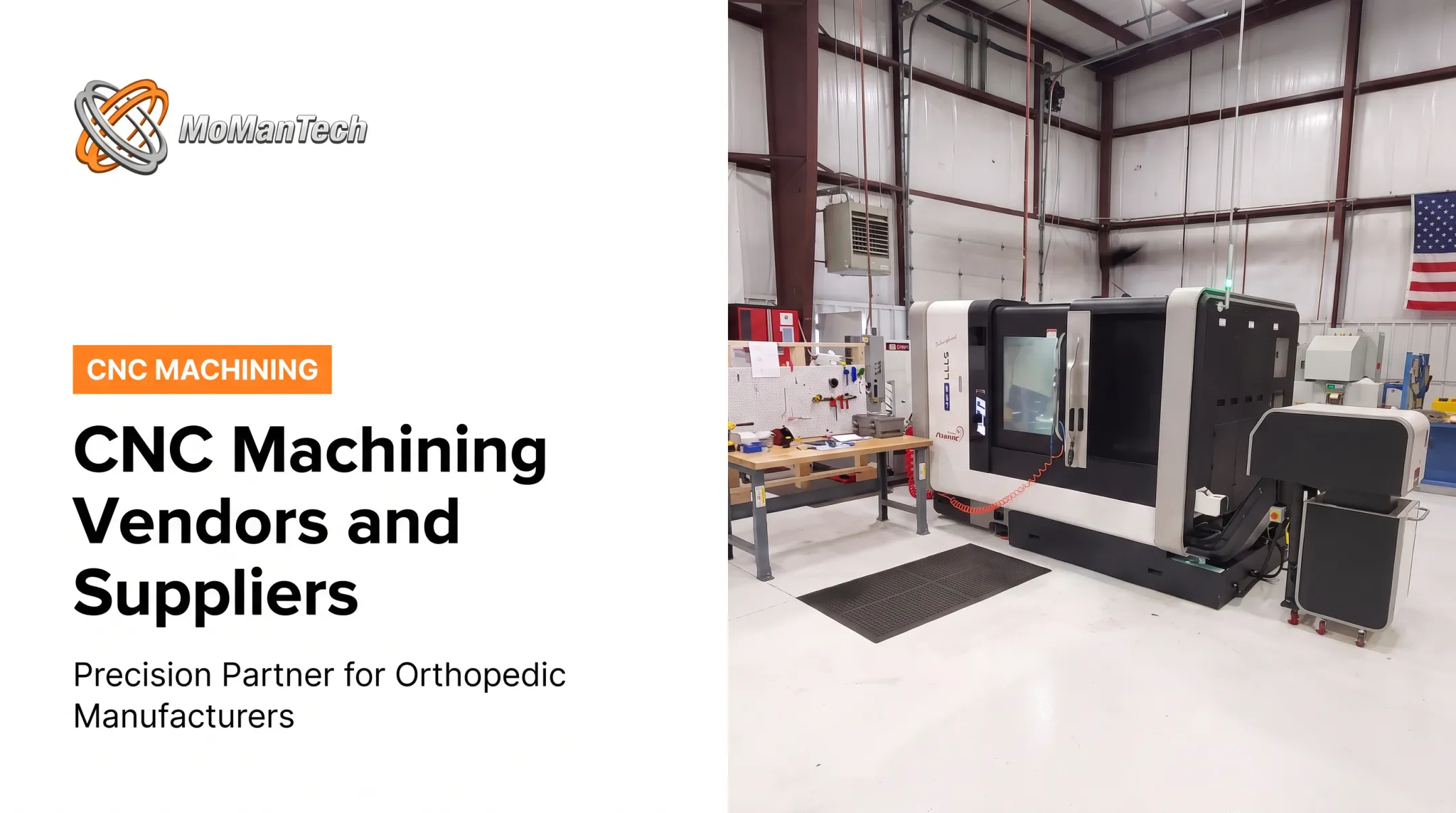
MoManTech's shop floor illustrates the range this term covers. Two 6-axis Mazak Integrex I-150 mill-turn centers handle bar stock up to 2.625 inches, while a 9-axis Quicktech S42ATM runs a full C-axis on its sub-spindle for small, intricate parts. These aren't interchangeable machines. Each suits a different part geometry and production volume.
How CNC Multi-Axis Machining Works: Axes, Setups, and Processes
From 3-Axis to 5-Axis
3-axis machining moves the tool along X, Y, and Z only. It works well for flat surfaces, accessible pockets, and simpler geometries where the part doesn't need to be approached from multiple angles.
4-axis machining adds one rotary axis, typically allowing the part to rotate so a second or third face becomes accessible without a manual re-fixture. This can reduce the number of separate orientations a job requires.
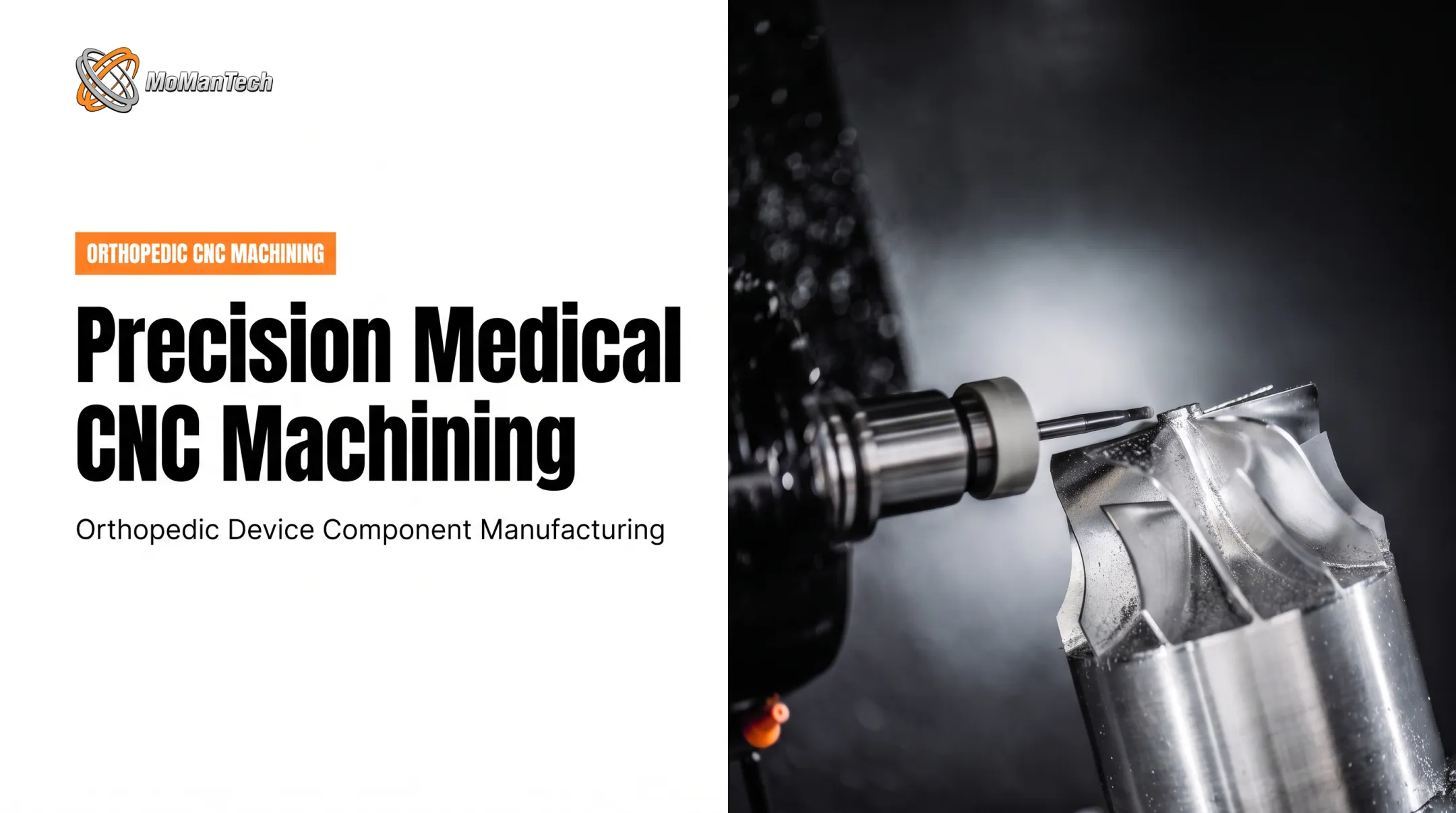
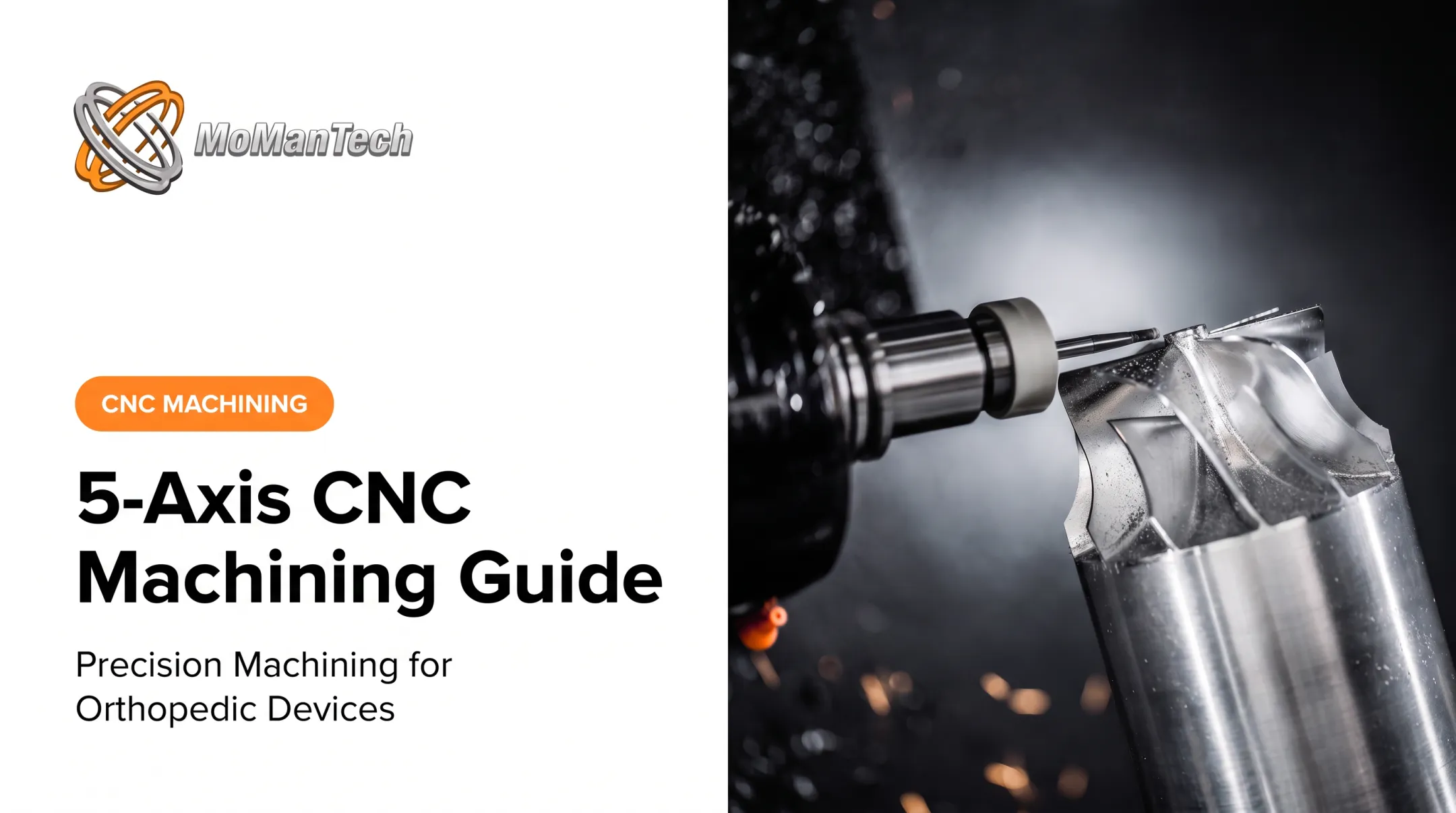
5-axis machining coordinates three linear axes with two rotary axes. The tool or workpiece can approach complex, free-form surfaces from continuously changing angles, which matters for contoured implant geometries.
Indexed 3+2 vs. Simultaneous Five-Axis
These two modes get lumped together, but they behave differently. In indexed 3+2 machining, the rotary axes move the part into position, then lock while the three linear axes cut at that fixed angle.
In simultaneous five-axis machining, rotary and linear axes move together during the cut itself. Okuma's 5-axis guide describes this as a distinct cutting mode rather than just a higher axis count. Indexed programming tends to feel closer to standard 3-axis work; simultaneous programming requires managing tool vectors throughout the cut.

A Typical Workflow
- CAD/CAM programming: MoManTech uses Autodesk/Partmaker and SolidWorks Professional to translate part geometry into toolpaths.
- Workholding setup: fixtures are selected to minimize repositioning.
- Tool selection and cutting: tooling is matched to material and feature requirements.
- Probing and inspection: in-process and final checks, often using vision and CMM equipment like the OGP Flash 302.
- Documentation: results recorded for traceability.
Fewer setups can reduce cumulative positioning variation and the handling errors that come with repeated fixture changes. That said, fixturing quality and process planning still determine the actual result. Swapping to a 5-axis machine doesn't guarantee a better part if the setup strategy is weak.
| Process | Best Fit |
|---|---|
| Conventional 3-axis | Flat or simple-feature parts, lower part complexity |
| Indexed multi-axis (3+2) | Multiple faces, moderate complexity, simpler programming |
| Simultaneous multi-axis | Contoured surfaces, tight feature-to-feature tolerances |
| Mill-turn/multitasking | Parts combining turned and milled features in one chucking |
Benefits, Applications, and Project Considerations
Manufacturability and Repeatability
Multi-axis access lets a programmer reach more features without redesigning the part or splitting the job across multiple operations. That matters for orthopedic components where angled holes and compound curves are common rather than exceptions.
Consolidating setups can also improve repeatability. In one documented case, Modern Machine Shop's 2025 report describes a shop replacing a multi-operation routing with a single five-axis setup, cutting machining time roughly in half. The source doesn't enumerate the prior number of fixturings, so treat it as a setup-consolidation example rather than a universal benchmark.
Surface Finish and Cost Tradeoffs
Shorter tool overhang made possible by favorable tool angles can improve rigidity and finish quality. That's not automatic, though. Finish also depends on tooling choice and CAM strategy, not axis count alone.
On cost: multi-axis equipment, programming, and skilled labor add upfront complexity. But setup consolidation and reduced rework can improve total project economics even when the per-hour machine rate looks higher.
Where This Applies at MoManTech
- Spinal components
- Joint and large-bone implant components
- Trauma parts
- Foot-and-ankle components
- Extremity implant components
A relevant data point: Modern Machine Shop's 2013 case study describes an orthopedic shop that switched from vertical to horizontal five-axis machining centers. The new architecture's shorter tool overhang and improved rigidity delivered 25-30% faster cycles than the shop's previous vertical setup. That gain was tied to machine architecture and access, not simply "adding axes."

Medical-Device Production Priorities
Orthopedic OEMs need more than a capable machine. Priorities that matter as much as axis count include:
- Design-for-manufacturability input early in development
- Controlled processes and documented inspection
- Full material traceability
At MoManTech, no component leaves the facility without comprehensive inspection. Design-for-manufacturability consultation happens during planning, not after the first article fails.
Choosing a CNC Multi-Axis Manufacturing Partner
What to Evaluate
- Machine and process capability: does the shop's equipment match your part's geometry and volume?
- Engineering communication: will they flag manufacturability issues before cutting chips?
- CAD/CAM expertise: can they program efficiently for indexed or simultaneous work?
- Workholding and inspection resources: vision systems, CMM, probing?
- Quality documentation: traceability records, inspection reports, certifications?
- Production scalability: can they move from prototype to 100+ unit runs without re-engineering the process?
The lowest machine-hour rate rarely equals the lowest total cost. Programming time, re-fixturing, scrap risk, inspection thoroughness, and responsiveness to change orders all factor into what a part actually costs to produce.
What to Provide When Requesting a Quote
- 3D models and drawings with current revision status
- Material specifications and required quantities
- Tolerances and surface-finish requirements
- Inspection expectations and documentation needs
- Delivery timing and any regulatory requirements
Why MoManTech
MoManTech is an ISO 13485:2016-certified contract manufacturer based in Sheridan, Montana. The shop focuses exclusively on orthopedic device components: spinal, joint, trauma, and foot-and-ankle parts.
It runs design-for-manufacturability consultation from the planning stage, comprehensive inspection on equipment like the OGP Flash 302, and automated production (including a 7-axis cobot and lights-out machining). That capacity supports everything from 1-10-unit prototypes to 100+-unit production runs.

If you're evaluating a complex part, a first article, or a repeat production run, MoManTech's engineering and manufacturing team can walk through fit and feasibility before you commit to a process.
Frequently Asked Questions
Is it true that a CNC machining center does all the work?
No. The machine executes a program, but CNC programmers, setup personnel, engineers, and inspection staff all shape the outcome. Tooling, fixtures, and quality systems determine whether that program produces a conforming part.
What are the key differences between milling and machining?
Milling is one specific cutting process where a rotating tool removes material from a workpiece. Machining is the broader category, which also includes turning, drilling, boring, and threading.
What is multi-axis milling?
Multi-axis milling adds coordinated rotary movement to standard milling, giving the cutting tool access to multiple faces, angles, and complex surfaces without constant manual repositioning.
What is component machining?
Component machining refers to manufacturing an individual part to specified dimensions, materials, tolerances, and quality requirements, using whichever CNC or machining process fits the part's geometry.