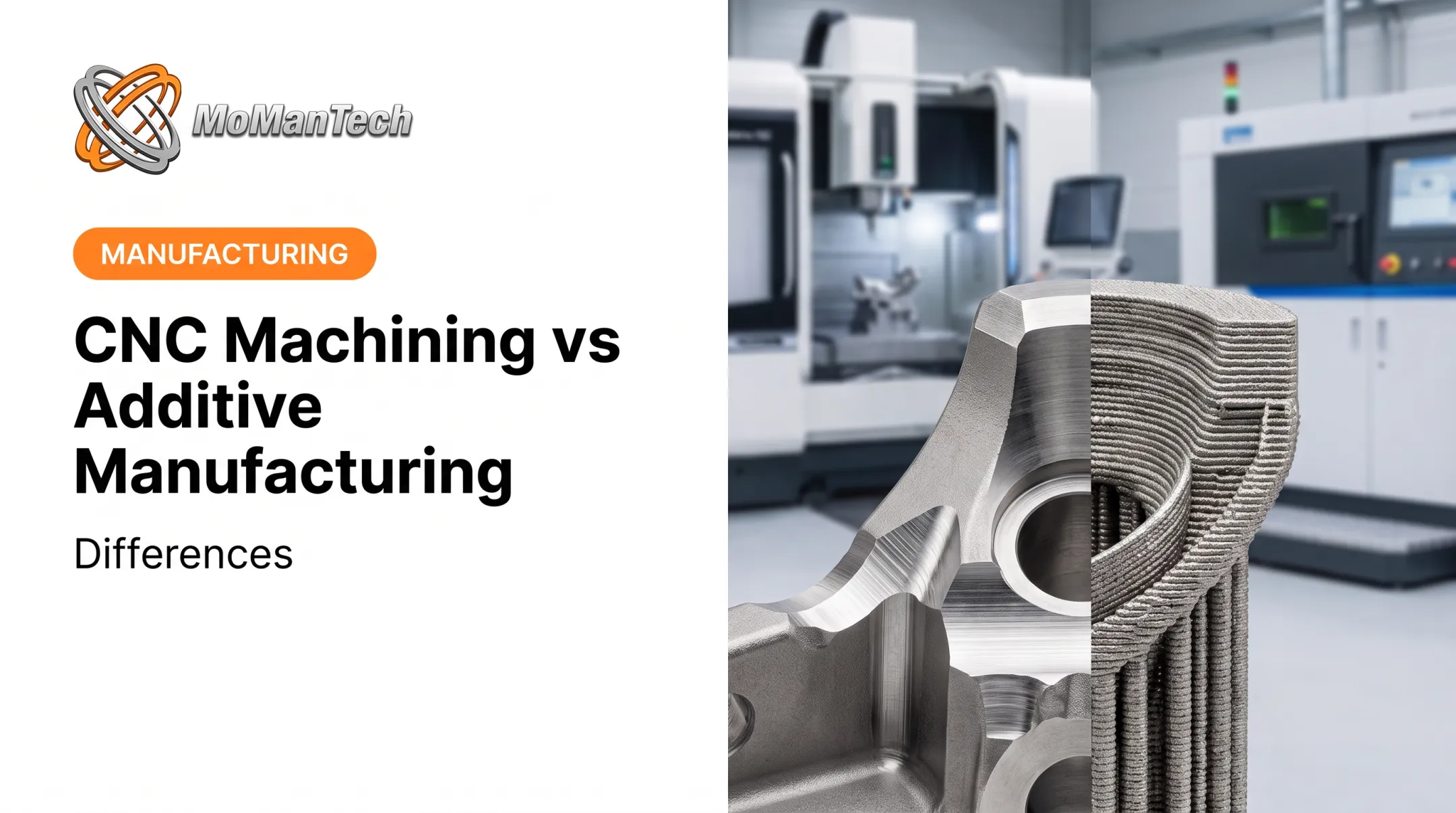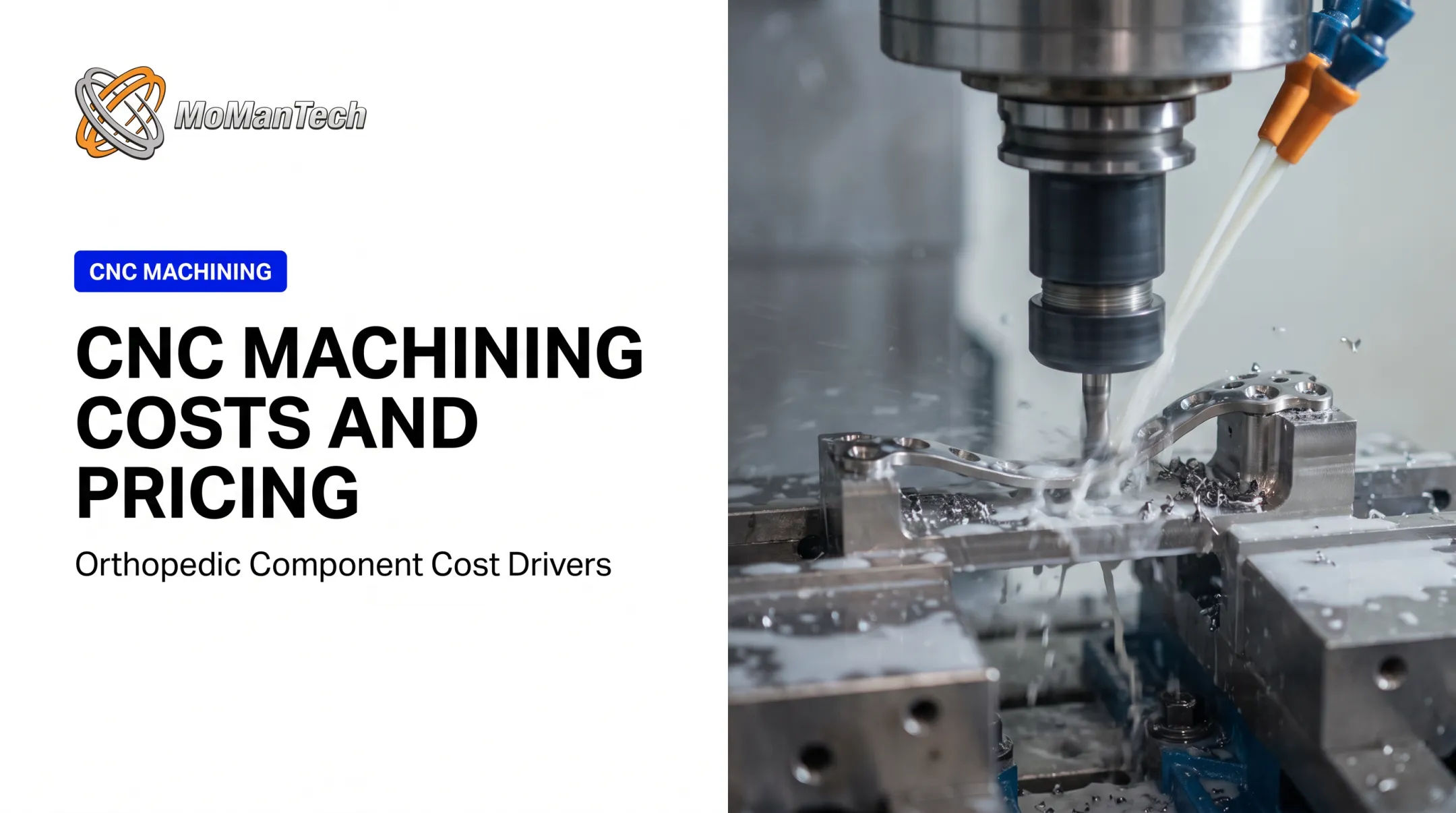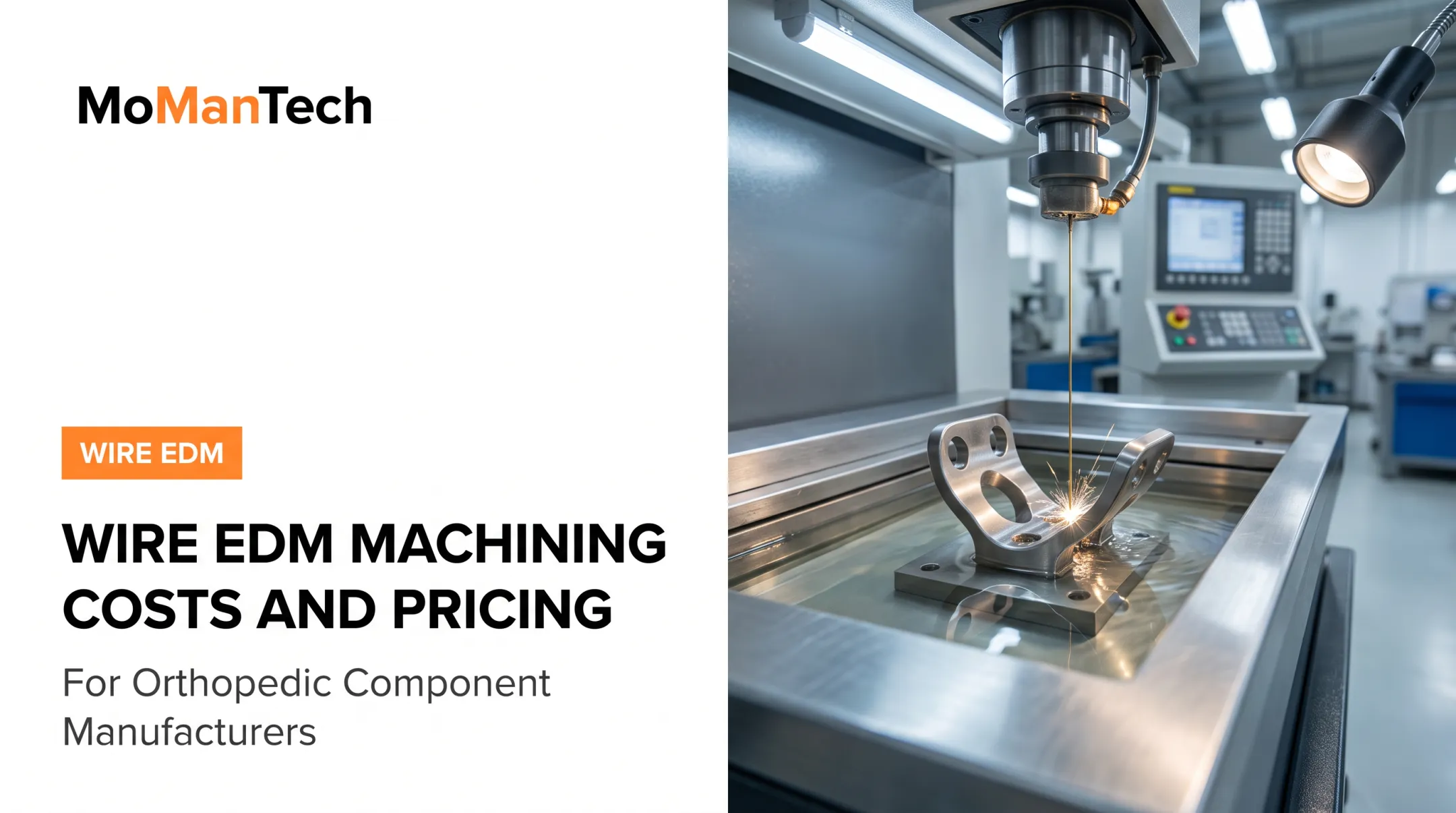

Pricing varies enormously because "prototype" covers wildly different jobs. A foam mock-up for a trade show display and a precision-machined orthopedic device component share almost nothing in terms of material, equipment, labor, or inspection requirements.
This article breaks down process-based pricing, the factors that push quotes up or down, what belongs in a quote package, and how to cut costs without weakening the validation you actually need.
Key Takeaways
- Prototype costs range from a few dollars for a simple print to thousands for a machined, inspected part
- Material, tolerances, quantity, finishing, and lead time can shift a quote significantly
- Low-cost processes work for early visual checks; CNC machining suits functional and quality-critical testing
- Budget around your validation goal, not the cheapest quote
How Much Does a Prototype Cost? (Pricing Overview)
There's no universal average cost for a prototype. The term can mean a quick design mock-up, a single precision-machined part, a first article, or a small production-representative batch. Each carries a different price tag, and manufacturing cost is separate from engineering or product-development fees.
Misunderstanding scope creates real budget problems:
- Underbudgeting: discovering testing, inspection, finishing, or revisions weren't included in the original quote
- Wrong process selection: choosing a method that can't reproduce the required material, tolerance, or functional performance
- Apples-to-oranges comparisons: comparing a bare part-only quote against one that includes programming, documentation, or assembly
Typical Cost Range
Published figures are directional, not guaranteed pricing. A few reference points help frame expectations:
| Prototype type | Directional evidence | What's typically unclear |
|---|---|---|
| Simple hand-sized FDM model | Per-unit examples as low as $2.80–$7.92 for basic plastic parts | Dimensions, finishing, and quantity assumptions behind the example |
| CNC-machined metal part | No fixed range exists; setup, material, and machine time drive the number | Tolerance level, inspection scope, and secondary operations |
| Small urethane-cast batch | Master pattern and tooling cost separately from per-part casting | Mold life and finishing requirements |
| Aluminum injection-mold tooling | Starting around $1,500 per Protolabs' 2024 report | This is a tool-only floor, not a complete order with parts and qualification |
Treat every number above as a reference point, not a quote. Always confirm what's included: CAD prep, material, setup, machining, finishing, inspection, shipping, and engineering changes can all be bundled differently between suppliers.
Entry-Level / Early-Stage Prototype
These prototypes answer basic questions: Does the form look right? Is the size approximate? Does it feel ergonomic in hand?
Additive manufacturing, off-the-shelf materials, and simplified geometry keep costs low here. A typical build uses FDM or SLA printing in ABS, PLA, or a similar off-the-shelf resin, with per-part costs similar to the basic FDM example shown above.
Turnaround often runs a day or two, which makes this stage useful for quick design iteration before committing to tighter tolerances or final materials. This level of prototype usually doesn't represent final strength, surface finish, dimensional accuracy, or production-process capability. It's a visual and conceptual check, nothing more.
Functional / Precision Prototype
Once you need to test fit, assembly, or mechanical performance, CNC machining or another production-representative process becomes necessary. Real materials and tighter tolerances mean more labor and equipment time, which raises the price accordingly.
Material certification, dimensional inspection, and first-article documentation typically get added at this stage, since the goal shifts from visual approval to proving the part actually performs under real-world load conditions.
For orthopedic device components specifically, requirements around tolerances, inspection, and traceability can be more demanding than a general-purpose prototype. Any specific requirement should be verified against the project's own quality documentation rather than assumed.
Production-Intent or Small-Batch Prototype
First articles and small batches cost more in total, but they answer questions a single part can't: repeatability, manufacturability at scale, and inspection consistency across units.
Quantity has an interesting effect: setup cost gets spread across more parts, lowering cost-per-unit, while total project spend still climbs. A 10-unit batch costs more overall than a single unit, even though each individual part is cheaper to produce.

Key Factors That Affect Prototype Cost
Several technical and business variables determine how a quote gets built. Understanding them helps you ask the right questions before requesting pricing.
Manufacturing Process and Prototype Objective
Different processes carry different setup investments and capabilities:
- Additive manufacturing: low setup cost, fast turnaround, limited by material properties and surface finish
- CNC machining: moderate setup, production-grade materials, strong dimensional accuracy
- Urethane casting: moderate tooling investment, good for small batches of rubber-like or plastic parts
- Injection molding: high upfront tooling cost, most economical at higher volumes with production-representative finish
Choosing based on your test objective — not the lowest quote — prevents paying for a prototype that can't actually answer your engineering question.
Material Selection
Material choice affects far more than the sticker price of raw stock. A 2022 stock comparison found PEEK costs roughly 7.64 times more than 6061 aluminum for equal-size sheets, according to Fictiv's material comparison. That premium doesn't transfer directly to a finished part price, since machining time and design complexity also factor in heavily.
Material decisions also touch:
- Machining time and tooling wear
- Waste generated during material removal
- Finishing requirements
- Sterilization or biocompatibility needs for medical applications
- Whether the prototype truly represents the intended production material
Part Size, Complexity, and Feature Density
Deep cavities, thin walls, and tight-tolerance small features all add programming and machine time. Multiple setups and tricky workholding compound the effect.
A quick example: if a prototype needs one specific feature tested, simplifying the rest of the geometry (rounding noncritical edges, skipping cosmetic details) can meaningfully cut machine time while still validating the feature that matters.
Tolerances, Surface Finish, and Secondary Operations
Secondary operations add labor and process steps:
- Polishing, blasting, or anodizing
- Passivation or coating
- Deburring and heat treatment
- Assembly of multiple components
Tolerances should match function and risk, not habit. Specifying tighter precision than the test requires adds cost without improving what you learn from the prototype.

Quantity, Lead Time, and Iterations
One-off work costs differently than small batches. Expedited schedules, limited material availability, and repeat revisions all add expense through scrap and rework.
Before requesting a quote, define:
- Expected quantity
- Target delivery date
- Current revision status
- Anticipated number of design iterations
Cost Breakdown by Prototyping Process
A quote should be read as a scope of work, not a single number. The same part design can carry very different prices depending on process, quantity, quality requirements, and timing.
CNC-Machined Prototype Cost
CNC pricing typically breaks into:
- Programming and engineering review
- Machine setup and workholding
- Raw material
- Machining time
- Tooling
- Deburring and finishing
- Inspection
- Packaging and shipping
CNC machining is often the right call for functional prototypes that need production-grade metals or engineering plastics, dimensional accuracy, and realistic mechanical performance. MoManTech's precision CNC capabilities (milling, turning, Swiss lathe, and wire EDM) support exactly this kind of functional validation for orthopedic device components, running prototype lots of 1–10 units before scaling toward production.
Additive-Manufactured Prototype Cost
Major cost components include:
- Machine time
- Build volume
- Material type
- Support structures
- Part orientation
- Post-processing
- Design iterations
3D printing works well for early form and fit checks. It becomes less useful for functional validation when material anisotropy, surface finish, or dimensional accuracy don't match the production process. MoManTech's additive prototyping covers metal options including 17-4 and 316L stainless steel and beta titanium, along with composites like Onyx (a material rated 1.4 times stronger than ABS) for applications needing more than a basic visual model.
Urethane Casting and Other Low-Volume Methods
Urethane casting costs break into separate pieces: the master pattern, the silicone mold, per-part casting, and finishing. Mold life is limited: Fathom's casting data reports an average of 20–25 parts per silicone tool before replacement is needed.
This makes urethane casting economical for small batches but worth comparing against one-off machining or larger-volume molding once quantities climb. Other processes like laser cutting or sheet-metal fabrication only apply to specific geometries. Not every method fits every design.

Injection Molding and Production-Intent Prototypes
Tooling creates a substantial upfront cost for injection molding, which becomes more economical as quantity rises or when production-like repeatability and surface finish are essential.
There's a meaningful distinction between:
- Prototype tooling: lower cost, shorter guaranteed part life
- Bridge production tooling: mid-range investment, moderate volume capability
- Final production tooling: highest upfront cost, built for long-term volume
Cost and lead time vary by material and part complexity, so a project-specific quote is necessary rather than relying on general tooling price floors.
Medical-Device and Precision-Machining Considerations
Prototypes for orthopedic implants and instruments often require controlled processes, trained personnel, comprehensive inspection, and traceability documentation. These requirements should be clearly spelled out in any quote before work begins.
MoManTech operates as an ISO 13485:2016-certified manufacturer focused exclusively on orthopedic medical-device components: spine, trauma, large joint, and foot/ankle applications. The shop supports prototype quantities of 1–10 units and later production runs of 100 or more, with every component comprehensively inspected before it leaves the facility.
That said, certification covers manufacturing capability. It doesn't automatically mean a given prototype is cleared for clinical or patient use. Regulatory approval and validation responsibility remain separate considerations that each project needs to confirm.
How to Estimate the Right Prototype Budget and Avoid Hidden Costs
Start with the validation question. Are you testing appearance, ergonomics, fit, assembly, material behavior, mechanical performance, or manufacturability? The answer shapes every decision that follows.

Build a complete quote package before reaching out to suppliers:
- Latest CAD files and drawings
- Material specification
- Quantity needed
- Critical dimensions and tolerances
- Surface-finish requirements
- Secondary operations
- Inspection expectations and documentation needs
- Delivery date and current revision level
When comparing quotes, confirm what's actually included: programming, setup, tooling, finishing, inspection reports, first-article documentation, shipping, taxes, and policies for engineering changes or rework.
For precision-machined orthopedic components with a clearly defined scope, request a project-specific quote from MoManTech rather than relying on general pricing assumptions.
Hidden costs tend to come from the same handful of sources:
- Incomplete or ambiguous drawings
- Unnecessary tolerances that don't improve the test
- Design changes submitted after programming is complete
- Expedited material sourcing
- Low-yield or hard-to-machine geometry
- Failed inspection requiring rework
- Producing more units than the current stage actually requires
To keep costs under control:
- Simplify noncritical features wherever possible
- Use standard materials when technically acceptable
- Consolidate compatible parts into fewer setups
- Plan expected iterations upfront
- Request design-for-manufacturability feedback early
- Build in adequate lead time to avoid rush fees
Conclusion
Prototype cost depends on purpose, process, material, complexity, tolerance, quantity, quality requirements, and schedule. There's no single industry-wide average that applies across all of those variables.
A useful quote separates one-time setup costs from recurring per-part costs, secondary operations, inspection, documentation, and potential revision or testing expenses. Reading a quote this way, rather than as one lump figure, makes it far easier to compare suppliers fairly.
The right prototype budget is the one that generates reliable validation data and supports a practical transition to production, not simply the lowest bid.
Frequently Asked Questions
What is the average cost of prototyping?
There's no universal average because "prototype" covers everything from a simple printed model to a precision-machined, production-intent part. Costs depend heavily on process, material, and quality requirements : check process-specific ranges rather than a single number.
Who can build my prototype?
The right supplier depends on your material, complexity, validation goal, quality requirements, and quantity. For precision orthopedic components, specialized contract manufacturers with medical-device certifications are typically the better fit over general-purpose shops.
What is meant by prototyping?
Prototyping means creating a preliminary model, part, or assembly to test design assumptions before full production. Prototypes range from basic visual mock-ups to functional test parts to production-intent first articles.
What factors affect prototype cost?
Process, material, complexity, tolerances, quantity, finishing, inspection, lead time, and the number of expected design iterations all directly influence a prototype quote.
Is CNC machining a good option for prototypes?
CNC machining is valuable when you need production-grade materials, tight tolerances, or functional testing in small quantities. Simpler visual prototypes, by contrast, often suit lower-cost processes like basic 3D printing instead.
How can I reduce prototyping costs?
Define a clear validation objective, request DFM feedback early, use standard materials where appropriate, and assign tolerances based on actual function. Complete drawings, planned iterations, and quotes compared on matching scopes also help avoid surprises.