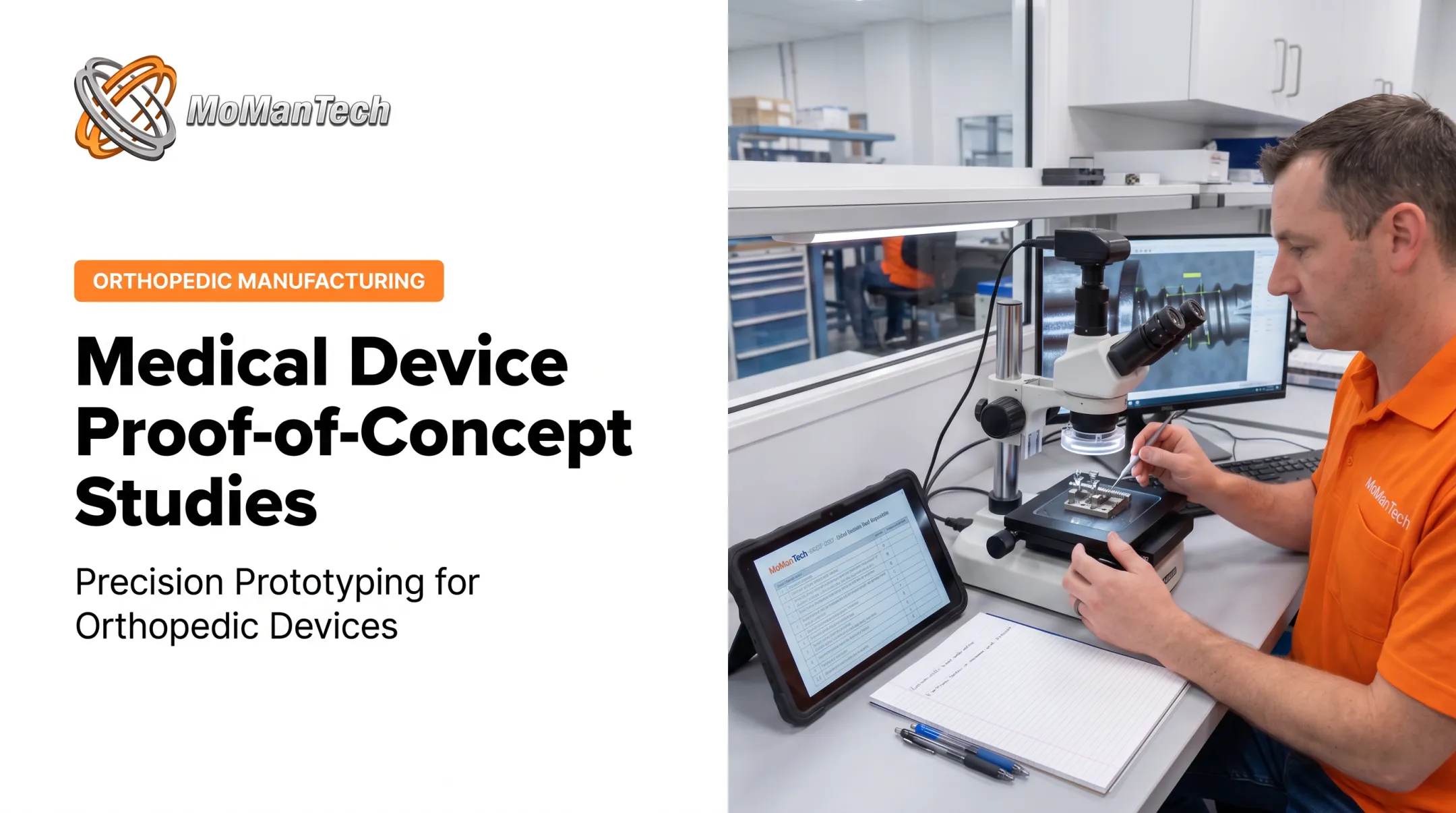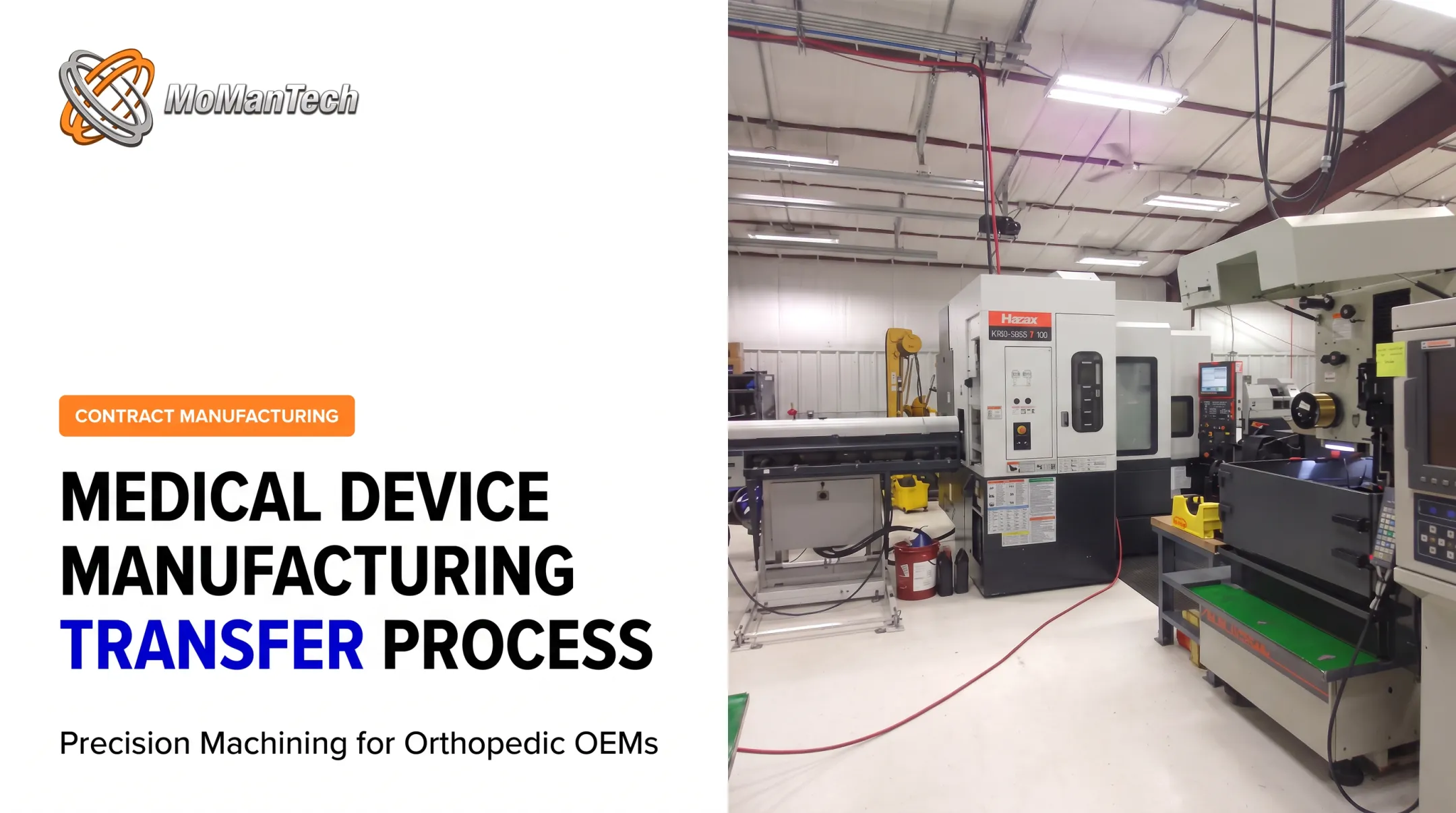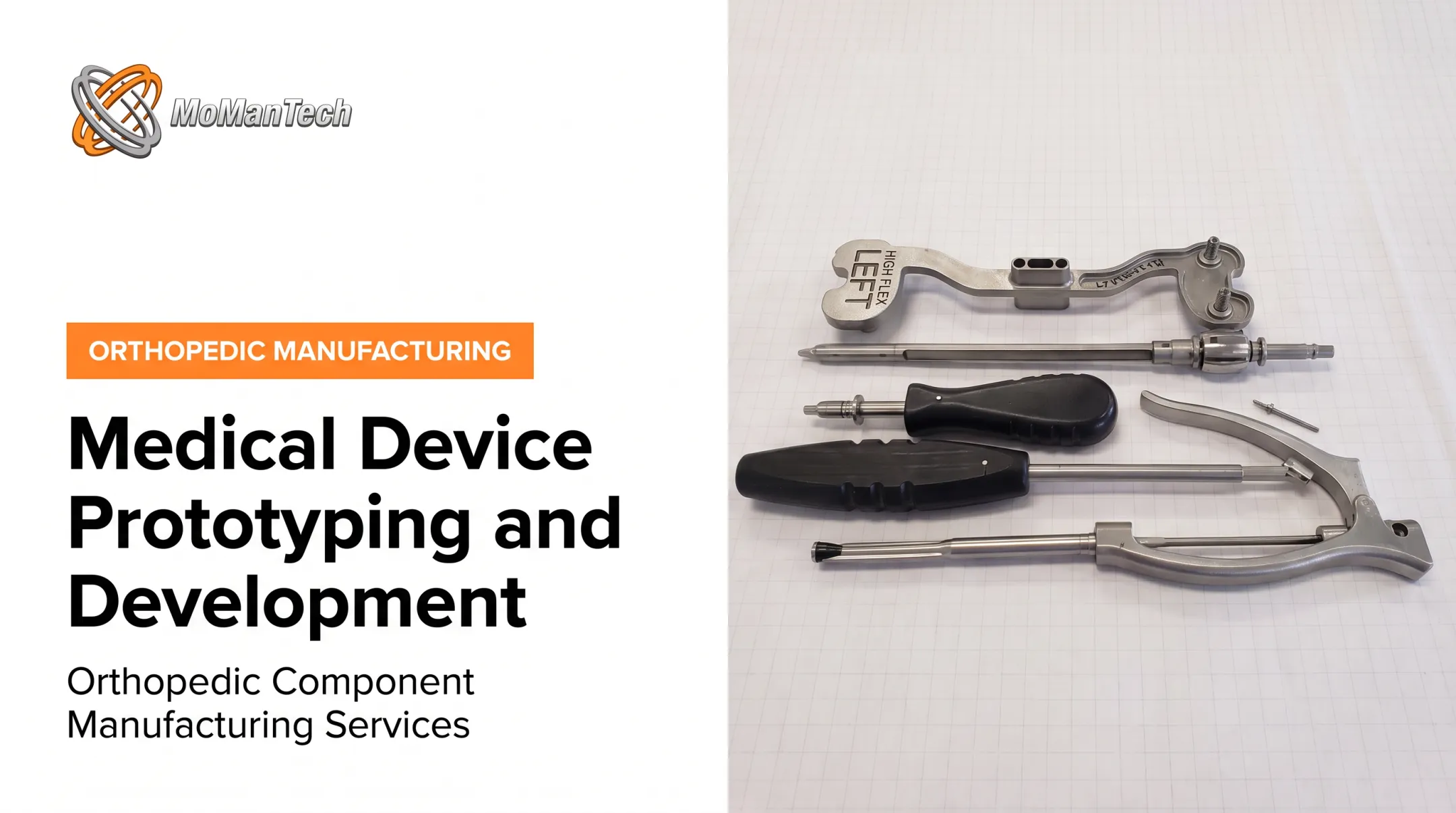

This matters most for US medical device startups, OEMs, engineers, and quality or regulatory teams working on orthopedic implants and instruments. Every decision along the way, from material selection to tolerance stack-up, affects patient safety, device performance, manufacturability, and FDA compliance.
Many teams describe this as a simple, linear sequence of phases. In practice, it's far more interconnected. Feasibility findings reshape design inputs. Manufacturing constraints send engineers back to the drawing board. This article walks through the stages, the controls that hold them together, the manufacturing decisions that affect outcomes, and the pitfalls that trip up even experienced teams.
Key Takeaways
- Medical device development is a risk-based, documented lifecycle, not a one-time design exercise.
- User needs, intended use, device classification, and risk management should shape decisions from day one.
- Design inputs, outputs, verification, validation, and design transfer form a connected chain of evidence.
- Manufacturability, inspection, and supplier controls need attention well before production scale-up.
What Is the Medical Device Product Development Process and Why Is It Used?
The medical device product development process converts a clinical or market need into a device that's safe, effective, manufacturable, and legally marketable. That last word matters. A device can work perfectly on a bench and still fail to reach patients if the regulatory evidence isn't there.
Product development is broader than product design. Design focuses on the technical solution, meaning geometry, materials, and mechanisms. Development wraps around that with feasibility studies, risk management, verification and validation testing, manufacturing transfer, regulatory submissions, launch activities, and post-market surveillance.
The specific evidence and controls required depend on several factors:
- Intended use and target patient population
- Device classification (Class I, II, or III)
- Materials and manufacturing method
- Target market and applicable standards
Because these variables shift so much from device to device, there's no single universal pathway. FDA's QMSR training materials describe design and development as processes that turn user requirements into increasingly detailed specifications. Verification confirms outputs meet inputs, and validation confirms the finished device meets its intended use requirements.
Why Structured Controls Exist
Medical devices need documented controls because patients' outcomes depend on them. Structured development provides:
- Traceability from user need to finished device
- Repeatable performance across production lots
- Controlled changes that don't introduce unintended risk
- Objective evidence that requirements were actually met
Skip this structure, and the consequences show up later, usually at the worst possible time. Teams that treat development as an informal engineering project tend to hit:
- Late design changes
- Failed verification testing
- Production problems
- Incomplete documentation
- Delayed submissions
- Expensive rework
None of that is theoretical. It's the most common reason timelines slip by months.
How the Medical Device Product Development Process Works
Most organizations describe the lifecycle in five broad phases. Companies divide or name these differently, but the underlying activities stay consistent: concept and feasibility, design and development, verification and validation, manufacturing transfer and regulatory readiness, and launch with post-market monitoring.

Concept and Feasibility
This phase establishes whether an idea is worth pursuing. Teams research clinical need, gather user and stakeholder input, study the competitive landscape, and check intellectual property considerations. Preliminary risk analysis starts here too, alongside early questions about:
- Technical feasibility of the proposed design
- Likely device classification and regulatory pathway
- Commercial viability given market conditions
Getting this phase wrong is costly. A classification assumption made in week two can derail a submission strategy eighteen months later.
Design and Development
Teams translate user needs into measurable design inputs, then into design outputs such as:
- Drawings, specifications, and bills of materials
- Prototypes and inspection criteria
- Software requirements where applicable
Human factors and risk controls belong in this phase, not bolted on afterward. Early design-for-manufacturability reviews catch costly issues before tooling and process validation lock them in.
Verification and Validation
These two terms get confused constantly, but they ask different questions:
- Verification asks: did the outputs meet the design inputs?
- Validation asks: does the finished device meet user needs and intended use?
Evidence varies by device, risk profile, and intended use. Common sources include:
- Bench testing, dimensional inspection, and materials analysis
- Usability studies and simulated-use testing
- Biocompatibility data and sterilization validation
- Electrical safety testing, software verification, or clinical evidence
Not every device needs all of these.
Manufacturing Transfer, Launch, and Post-Market
Controlled design information moves into production here. Process qualification, pilot builds, and first-article inspection confirm manufacturing can consistently produce what the design requires. Regulatory readiness runs in parallel: the design history file, device master record, and submission package must be complete before commercial release.
Once the device launches, post-market work continues for its commercial life:
- Complaint handling and adverse-event reporting
- CAPA (corrective and preventive action)
- Change control and ongoing risk review
Where the Process Is Applied and What Affects It
This process applies across implants, surgical instruments, diagnostics, capital equipment, software-enabled devices, and combination products. The exact evidence and regulatory pathway, whether that's 510(k), De Novo, or PMA, vary by device type and risk classification.
Manufacturing input matters most at specific points in the lifecycle:
- Early concept reviews, where feasibility gets tested against production reality
- Material and tolerance selection, which lock in cost and performance tradeoffs
- Prototype builds, where design flaws surface before they're expensive
- Design freeze, the last easy opportunity for manufacturing input
- First articles and process validation, confirming the process works at scale
- Production ramp-up and engineering changes, where repeatability gets tested
Orthopedic-Specific Considerations
For orthopedic components specifically, a handful of variables drive both design and production decisions:
- Materials, geometry, and tolerances
- Surface requirements, cleanliness, and sterilization compatibility
- Packaging needs and intended clinical use
A titanium spinal component and a cobalt-chrome joint component carry different machining, cleaning, and inspection demands, even when built in the same facility.
These factors also shape cost, lead time, quality, and scale:
- Equipment capability, tooling, and fixture design
- Inspection methods and supplier controls
- Batch size and production volume
Design-for-manufacturability (DFM) reviews catch problems before they become expensive. A feature that looks fine on a CAD model might be nearly impossible to hold to tolerance, or might require inspection methods that don't exist on the shop floor. Catching that during a DFM review, rather than after design freeze, saves both time and money.

Documented inspection and traceability provide objective evidence for release decisions and stand up to customer or regulatory review.
This is where a manufacturing partner's role becomes concrete. MoManTech, an ISO 13485:2016-certified US manufacturer based in Sheridan, Montana, works with orthopedic OEMs on design-for-manufacturability consultation, precision CNC machining, prototypes and first articles, and comprehensive inspection.
The shop supports quantities from 1-10 unit prototype runs up to production volumes of 100 or more, so a program can grow without switching suppliers mid-stream. MoManTech does not perform regulatory approval or clinical validation; that work stays with the OEM and its regulatory team. It supplies the manufacturing evidence and consistency that support those broader efforts.
Common Issues and When the Process May Not Be Appropriate
It's Rarely a Straight Line
Teams often expect a linear march from concept to launch. Real projects iterate between feasibility, design, testing, risk management, and manufacturing. That's normal, as long as changes stay controlled, documented, and traceable. Uncontrolled iteration, where changes happen without documentation, is the actual problem.
Manufacturing Input Comes Too Late
A frequent mistake: postponing manufacturing and quality input until after design freeze. Unresolved tolerances, material choices, inspection methods, or process constraints discovered at that stage often force a redesign, with all the schedule and cost impact that implies.
Mixing Up Different Requirements
Verification, validation, regulatory clearance, and ISO 13485 certification serve different purposes:
- Verification confirms outputs meet design inputs
- Validation confirms the device meets user needs
- Regulatory clearance confirms FDA has authorized marketing
- ISO 13485 certification confirms a quality management system is in place
None of these substitute for another. Treating them as interchangeable creates gaps in documentation that surface during audits or submissions.
Not Every Activity Applies to Every Device
Clinical testing, electrical safety testing, software validation, and sterilization studies don't apply universally. Whether they're needed depends on the device, its intended use, its risk profile, and its target market. Determining applicability requires a specific assessment, not a generic checklist.

Warning signs the process isn't fitting the device include:
- Duplicated testing across phases
- Uncontrolled or scattered documentation
- Unclear acceptance criteria
- Missing ownership for key decisions
- A manufacturing method that doesn't match the device's requirements
When these signs show up, it's worth consulting qualified quality and regulatory professionals rather than pushing forward on assumptions.
Conclusion
The medical device product development process links clinical need, design controls, risk management, evidence generation, manufacturing, regulatory readiness, and post-market learning into one connected lifecycle. None of those pieces work well in isolation.
Early cross-functional collaboration, especially design-for-manufacturability input, improves quality and reduces rework. It doesn't replace required regulatory activities, but it does make the path to them more predictable.
The right process scales to the device and its intended market. What stays constant across every successful orthopedic device program is reliable manufacturing and documented inspection, the foundation on which everything else is built.
Frequently Asked Questions
What are the five phases of medical device development?
Most organizations describe five broad phases: concept and feasibility, design and development, verification and validation, manufacturing transfer and regulatory readiness, and launch with post-market surveillance. Companies may use different names for these same activities.
Does GMP apply to medical devices?
Yes. Medical device manufacturers must follow applicable quality system and manufacturing controls under FDA's device-specific regulations. These differ from pharmaceutical GMP, so confirm the specific rules for your device and market.
What are the key trends in medical devices for 2026?
AI-enabled devices continue to expand, with the FDA reporting more than 1,000 authorized AI-enabled devices and new draft lifecycle guidance. Other major themes include connected software products, cybersecurity, patient-specific solutions, manufacturing automation, and supply chain resilience.