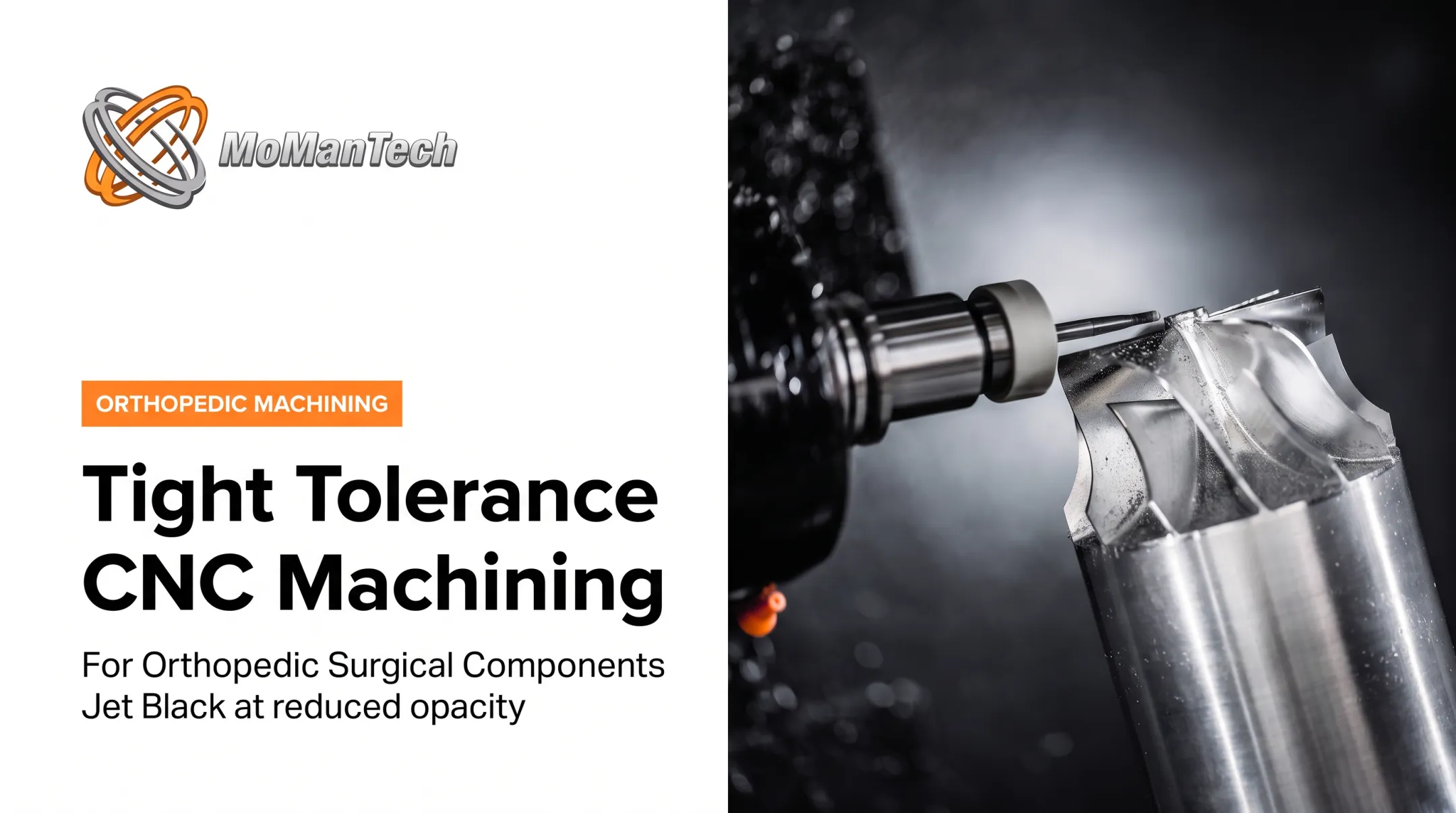

But here's the catch: the same hardness and toughness that make cobalt chrome valuable in the body make it brutal on cutting tools. Machinists who treat it like stainless steel end up with scrapped parts and blown budgets.
Common risks include:
- Accelerated tool wear from abrasive carbides
- Work hardening that worsens with every pass
- Heat buildup that degrades cutting edges
- Dimensional drift and inconsistent surface finish
- Scrap costs that compound quickly given material price
This guide covers material behavior, process controls, and how to vet a US machining partner who actually understands cobalt chrome.
Key Takeaways
- Cobalt chrome is an alloy family, so programming decisions start with the exact grade and condition, not a generic feeds-and-speeds chart
- Rigid workholding, correct carbide selection, and documented tool-life tracking keep the process stable
- Low thermal conductivity and high abrasiveness combine to accelerate tool degradation, according to Carpenter's material data
- Orthopedic suppliers need more than machine capability; they need DFM support, inspection records, and regulated-industry experience
Cobalt Chrome: Material Characteristics and Orthopedic Applications
Cobalt chrome isn't one material. It's a family of Co-28Cr-6Mo alloys covered by several ASTM specifications, each built for a different stock form.
ASTM F75 covers castings, F1537 covers wrought bar used for surgical implants, and F799 covers high-strength forgings. These aren't interchangeable, and the spec your drawing calls out determines how the material actually behaves under a cutting tool.
Hardness shifts with condition, not just alloy. Alleima's material datasheet lists F1537 CoCrMo at roughly 25 HRC annealed, 28 HRC hot worked, and 35 HRC warm worked. That's a meaningful spread for a part programmer planning cutting parameters.

Why orthopedic engineers specify it:
- Wear resistance for articulating joint surfaces
- Corrosion resistance in a biological environment
- High strength-to-weight ratio for load-bearing fixation
- Established biocompatibility history across spine, joint, trauma, and extremity devices
Material Verification Before Programming
Hardness and machinability vary by heat treatment, microstructure, and stock form, even within the same alloy designation. Two bars both marked F1537 can cut differently depending on how they were processed.
Before programming a first article, confirm:
- Material certifications match the drawing's called-out grade and condition
- Incoming inspection verifies hardness, not just chemistry paperwork
- Stock form (bar, forging, casting) matches what the process plan assumes
Why Scrap Prevention Beats Tooling Savings
Cobalt chrome bar stock isn't cheap, and a scrapped near-net forging can cost far more than the tooling that failed to cut it. Chasing the lowest-cost insert often backfires when it leads to inconsistent cuts and rejected parts.
A stable first-article process and early design review typically protect margins better than shaving pennies off a tool budget.
Why Precision Cobalt Chrome Machining Is Difficult
Cobalt chrome resists machining on several fronts at once: abrasive wear, heat buildup, work hardening, and the rigidity demands of its geometry. Understanding each helps you diagnose problems before they turn into scrapped lots.
Abrasive Wear and Warning Signs
Hard carbide constituents in the microstructure accelerate flank, crater, and notch wear on cutting tools. Watch for these symptoms before a tool fails catastrophically:
- Surface finish gradually roughening on consecutive parts
- Burrs appearing where edges used to be clean
- Dimensions drifting outside tolerance mid-run
- Cutting forces climbing, audible as changes in spindle sound
Work Hardening: The Compounding Problem
Dwelling in the cut, rubbing instead of shearing, or re-cutting chips all harden the surface layer of cobalt chrome. Once hardened, that surface resists the next pass even more. A dull tool makes this worse, creating a feedback loop: dull edge, more rubbing, harder surface, faster dulling.
Heat Retention at the Cutting Edge
Cobalt chrome's low thermal conductivity means heat concentrates near the tool tip instead of dissipating into the chip or workpiece. Carpenter's BioDur data identifies this low conductivity, alongside the work-hardening rate and hard carbides, as the core reasons CCM is difficult to machine. That trapped heat accelerates tool degradation and can cause thermal damage to the part surface.
Geometry and Rigidity Matter More Than Usual
Stock form changes the plan entirely:
| Stock form | Planning consideration |
|---|---|
| Bar stock | Predictable but still abrasive; consistent engagement planning |
| Cast/near-net blanks | Variable stock allowance; interrupted cuts likely |
| Thin sections | Deflection risk; reduced engagement needed |
| Deep cavities | Longer tool overhang increases chatter risk |
Chatter, deflection, and tool pullout are especially damaging on tight-tolerance orthopedic features. Rigidity has to run through the whole chain: machine, spindle interface, toolholder, fixture, and the part itself. A weak link anywhere in that chain shows up as vibration marks or lost tolerance.
There's no universal cobalt-chrome recipe. Grade, tool diameter, flute count, engagement, machine rigidity, and coolant strategy all shift the right parameters. Start with toolmaker data, then run controlled trials.
A basic troubleshooting sequence:
- Identify the exact failure symptom (finish, dimension, burr, chatter)
- Inspect the tool edge and the chip shape
- Check runout and workholding security
- Review heat generation and engagement levels
- Change one variable at a time and document the result

Process Controls for Reliable Cobalt Chrome Machining
Reliable cobalt chrome machining comes from controlling the variables that drive wear and heat.
Tooling and Workholding
Carbide substrate, edge preparation, and geometry all need to match the alloy and operation. According to Canadian Metalworking, overly sharp edges can deteriorate fast and cause the rubbing that drives work hardening.
Reinforced shanks and appropriate corner radii reduce that risk. Final selection should still follow toolmaker recommendations and any medical-device validation requirements.
Workholding needs:
- Short tool projection to minimize deflection
- Low runout at the spindle interface
- Secure datum control between operations
- Repeatable fixturing when a part needs multiple setups
Cutting Strategy and Chip Evacuation
Maintain productive engagement rather than letting the tool dwell or rub. Manage entry and exit moves carefully, since these are common points for edge chipping. Poor chip evacuation causes recutting, which raises heat and damages both tool and part.
Coolant choices vary by cut. Some shops favor dry cutting to avoid coolant-induced thermal shock on the edge, while other testing has shown cryogenic cooling reducing surface roughness in CoCr milling. Match the approach to the operation, tooling, and part geometry.
Tool-Life Management
Track tool life by operation, material lot, and part family where practical. Set replacement criteria based on measurable wear, not guesswork, and inspect before a tool reaches catastrophic failure.
A practical parameter-development workflow:
- Start with validated manufacturer recommendations
- Run controlled test cuts on sacrificial stock
- Inspect both surface finish and dimensions
- Review tool wear under magnification
- Progressively optimize cycle time without sacrificing quality

When Milling or Turning Isn't the Right Process
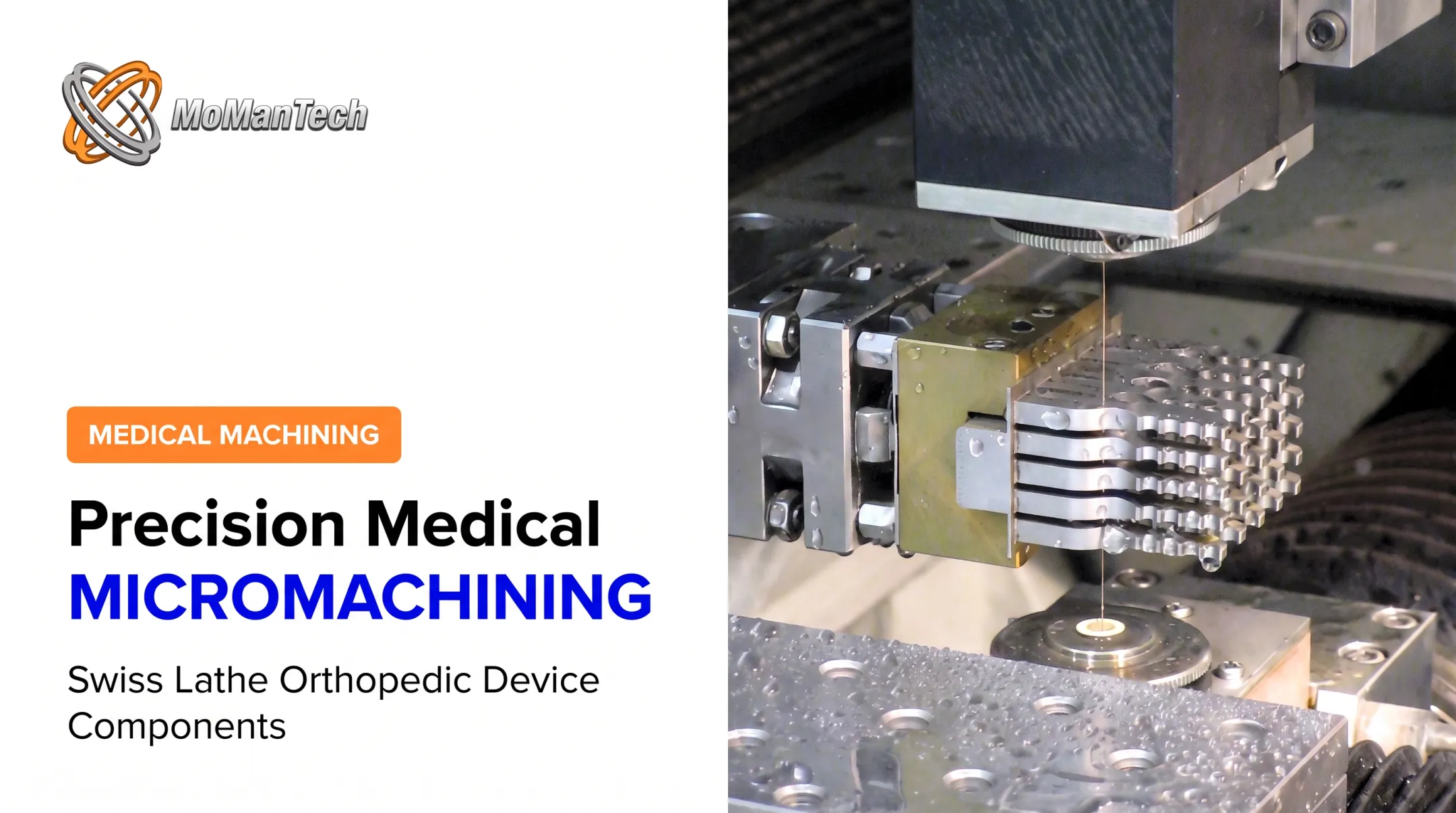
Some features are too small, delicate, or hard for conventional cutting. Wire EDM, sinker EDM, and grinding are worth considering for:
- Fine slots or profiles with tight geometric tolerance
- Hardened surfaces where cutting tools struggle
- Features with limited tool access
Process suitability always comes back to the drawing and the material condition.
Medical-Device Quality and Supplier Selection
Precision machining is only half the job on an orthopedic component. The other half is proving it, consistently, with documentation that satisfies regulatory expectations.
What Quality Looks Like in Practice
Tolerances and surface finish matter, but so do burr control, edge conditions, cleanliness, and material traceability. Buyers should expect inspection records tied to each lot, not just a certificate of conformance.
FDA's Quality Management System Regulation, which incorporates ISO 13485 by reference, becomes effective in early 2026. Component suppliers and finished-device manufacturers don't carry identical regulatory obligations, so clarify which role your machining partner plays.
Design-for-Manufacturability Review
Catching problems before production saves money. A DFM review typically flags:
- Features that are difficult to hold or fixture
- Walls thin enough to risk deflection or distortion
- Deep tool access that limits rigidity
- Tight tolerance stacks that compound across operations
Supplier Evaluation Checklist
Look for a partner that can show, not just claim:
- Orthopedic-specific machining experience (spine, trauma, joint, extremity)
- Prototype and first-article support for quantities as small as 1–10 units
- Documented process controls and corrective-action practices
- Inspection capability, including CMM or optical measurement
- Responsive communication and realistic capacity planning
- Ability to scale from prototype to repeat production orders
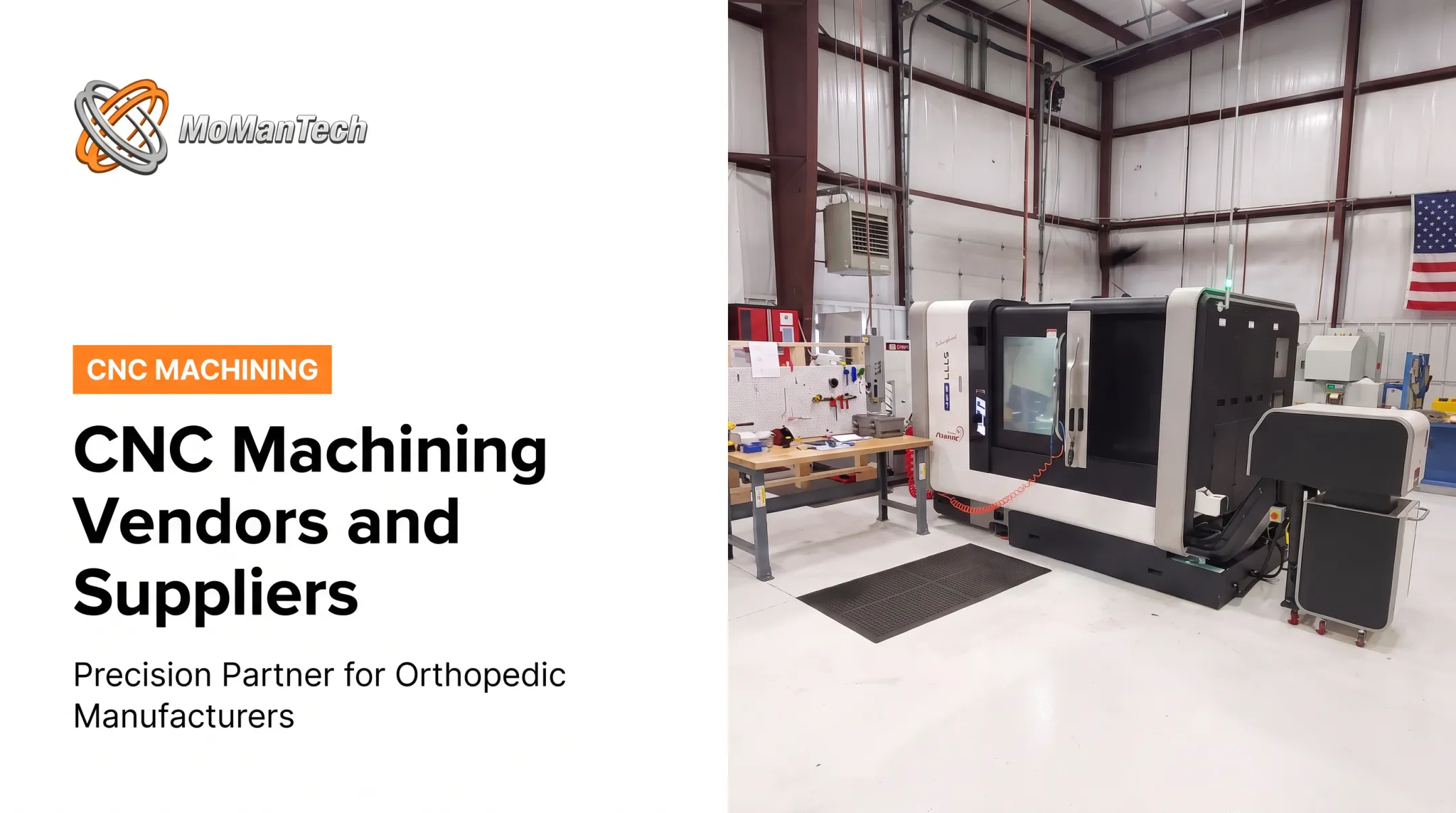
MoManTech, a Sheridan, Montana-based contract manufacturer, is one example worth reviewing against this list. The company is ISO 13485:2016-certified and focuses exclusively on orthopedic medical-device components across spine, trauma, large joint, and foot/ankle applications. It supports prototype lots of 1-10 units through production runs of 100-plus, backed by design-for-manufacturability consultation during the planning stage.
Inspection uses an OGP Flash 302 Vision machine with CMM and laser measurement, plus a Mitutoyo PHA 14 for shop-floor checks. According to the company, no component leaves the facility without comprehensive inspection.
MoManTech also uses an automated loading and unloading system, internally called BOB, on its Haas machining centers to support higher-volume, repeatable work and lights-out production. That automation adds capacity for suitable jobs, but it doesn't replace process validation, inspection, or operator oversight on critical features.
What to Include in Your RFQ
A complete request for quote speeds everything up. Include:
- Exact alloy designation and material condition
- Material certifications
- 3D model and current drawing revision
- Critical-to-quality features and tolerances
- Expected quantities (prototype or production phase)
- Finishing requirements and inspection reports needed
- Packaging and delivery expectations
If you're working through a cobalt-chrome drawing or a manufacturability question on a spinal, trauma, joint, or foot-and-ankle component, MoManTech's team reviews technical details before committing to specific capabilities. That technical review is the right place to start.
Frequently Asked Questions
How expensive is cobalt-chromium?
Price varies by alloy, stock form, order size, and supplier, and medical-grade CCM bar is typically quoted rather than listed at a fixed rate. Total cost also includes tooling wear, cycle time, inspection, and scrap risk, so request a specification-based quote rather than relying on a general price figure.
How hard is cobalt chrome?
Hardness depends on the specific alloy and its condition. For example, F1537 CoCrMo typically runs around 25 HRC annealed up to 35 HRC warm worked, so always check the datasheet for your exact grade and condition rather than assuming one universal hardness value.
Why is cobalt chrome difficult to machine?
Cobalt chrome combines high hardness, abrasive carbide constituents, and low thermal conductivity, which concentrates heat at the cutting edge. Add a strong tendency toward work hardening, and the material demands rigid setups and carefully controlled cutting conditions.
What cutting tools are best for machining cobalt chrome?
Tool choice depends on the alloy, operation, and desired finish. Commonly evaluated options include reinforced carbide tools with appropriate edge preparation, suitable corner radii, and coatings designed for difficult-to-cut alloys, selected according to toolmaker recommendations.
How do you prevent work hardening when machining cobalt chrome?
Maintain consistent, productive tool engagement instead of dwelling or rubbing in the cut. Use appropriate feeds and depth of cut, and replace worn tools before their degrading edge starts hardening the surface further.
What should I look for in a cobalt-chrome machining partner?
Look for documented orthopedic experience, ISO 13485:2016 or comparable quality systems, and design-for-manufacturability support. Also confirm inspection documentation, prototype-to-production responsiveness, and evidence of controlled process development rather than guesswork.